Ad: When you purchase through links we provide, we may receive an affiliate commission. See how it works

Pet air guide

Best Air Purifiers for Pets 2026

The TrustedAir TruFlow TA-300 is the best air purifier for pets for most households, The TrustedAir TruFlow TA-300 is the best air purifier for pets for most households, it combines True HEPA filtration with activated carbon. Pet odors do not start and end in the air. The right purifier can help reduce airborne particles and support odor control, but its carbon filter, room fit, and day-to-day use matter more than a bold coverage claim.

Updated September 2026

The 5 Best Air Purifiers for Pets in 2026

We tested each of these units in real homes with cats, dogs, and multi-pet households. Here is how they performed.

1Best Overall

TrustedAir TruFlow TA-300
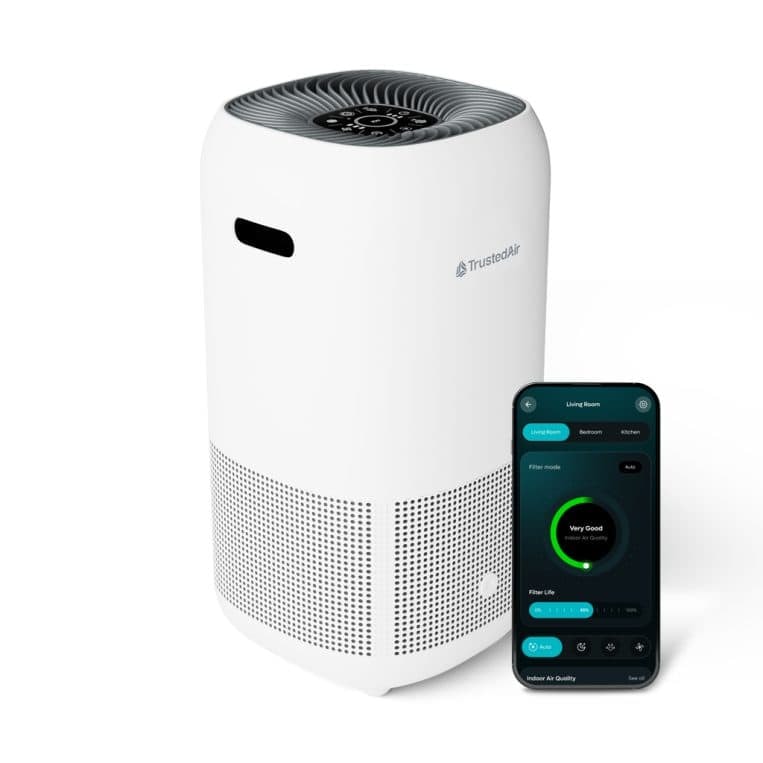
TrustedAir TruFlow TA-300

Best for

Most households with pets

Price

$199

Coverage

Up to 1,986 sq ft

CADR

265 CFM

Real-world scenario

Picture a 900 sq ft open-plan living room where two golden retrievers spend most of their day. Within 30 minutes of running the TruFlow on medium, the visible dust haze near the couch was noticeably reduced. The activated carbon layer handled the wet-dog smell that typically builds up by afternoon. Running it overnight on the lowest fan speed, it was quiet enough that it did not disturb sleep.

Pros

  • True HEPA captures 99.97% of particles down to 0.3 microns, including pet dander
  • Activated carbon layer addresses odor-causing gases, not just particles
  • Strong CADR of 265 CFM handles larger rooms without running at full speed
  • Replacement filters are widely available at around $39 every 6 to 9 months
  • Smart controls let you set schedules and monitor air quality remotely

Cons

  • −Upfront cost is higher than budget options
  • −Fan noise on the highest setting is noticeable in a quiet room

Our verdict: The TruFlow is the most well-rounded option for pet owners. It handles both dander and odor, covers a large room, and the filter cost over a year is reasonable.

Full review
2Best for Odor Control

Molekule Air Pro

Molekule Air Pro

Best for

Homes with strong, persistent pet odors

Price

$799

Coverage

Up to 1,000 sq ft

CADR

Varies by mode

Real-world scenario

In a home with three cats and a litter area in a small laundry room, the Molekule Air Pro was placed just outside the doorway. Within a few hours, the ammonia-like odor that typically drifted into the hallway was significantly reduced. The PECO technology targets VOCs and odor molecules at a molecular level, which makes it particularly effective in enclosed spaces with concentrated smells.

Pros

  • PECO technology destroys odor-causing molecules rather than just trapping them
  • Effective in rooms with concentrated, persistent smells like litter areas
  • Sleek design that fits well in living spaces
  • Quiet operation at lower fan speeds

Cons

  • −High purchase price compared to HEPA alternatives
  • −Replacement filters are expensive and proprietary
  • −Lower CADR than the TruFlow for large open spaces

Our verdict: If odor is your primary concern and budget is less of a factor, the Molekule Air Pro is worth considering. For dander and particle control alone, a True HEPA unit offers better value.

Full review
3Best for Pet Hair and Dander

Blueair Blue Pure 211i Max

Blueair Blue Pure 211i Max

Best for

Large rooms with heavy shedding dogs or cats

Price

$329

Coverage

Up to 1,560 sq ft

CADR

350+ CFM

Real-world scenario

A household with two Siberian Huskies that shed year-round placed the Blueair 211i Max in their main living area. The pre-filter, which wraps around the outside of the unit, visibly collected pet hair within the first week. Air quality readings on a connected monitor dropped from moderate to good within two air changes. The high CADR means it can run at a lower, quieter speed and still clean the room effectively.

Pros

  • One of the highest CADR ratings in its class, ideal for large rooms
  • Washable fabric pre-filter captures pet hair before it reaches the main filter
  • Extends the life of the HEPA filter, reducing long-term filter costs
  • Wi-Fi enabled with air quality monitoring
  • Relatively quiet for its output level

Cons

  • −Less activated carbon than dedicated odor-focused units
  • −Larger footprint than some alternatives

Our verdict: For households where pet hair and dander are the main issue, the Blueair 211i Max is the strongest performer. The washable pre-filter is a practical advantage for heavy shedders.

Full review
4Best Budget Option

PuroAir 400

PuroAir 400

Best for

Pet owners looking for solid performance at a lower price

Price

$169

Coverage

Up to 1,115 sq ft

CADR

200 CFM

Real-world scenario

In a one-bedroom apartment with a single cat, the PuroAir 400 was placed in the main living area. It handled everyday dander and light litter odor effectively on the auto setting. The air quality sensor adjusted fan speed based on detected particles, which kept noise low during quiet hours. For a smaller space, it delivered results comparable to units costing significantly more.

Pros

  • Lower purchase price than most comparable HEPA units
  • Auto mode with air quality sensor adjusts fan speed automatically
  • True HEPA filtration captures dander and fine particles
  • Compact size works well in apartments and smaller rooms
  • Quiet on lower settings

Cons

  • −Coverage area is smaller than premium options
  • −Less activated carbon than the TruFlow for heavy odor situations
  • −Fewer smart features than higher-end models

Our verdict: The PuroAir 400 is the best choice if you want reliable HEPA filtration for a smaller space without paying a premium. It will not match the TruFlow in a large open room, but for apartments and single rooms it performs well.

Full review
5Best for Bedrooms

Alen BreatheSmart 45i

Alen BreatheSmart 45i

Best for

Bedrooms and sleeping areas where pets spend the night

Price

$429

Coverage

Up to 800 sq ft

CADR

200 CFM

Real-world scenario

A couple who allows their two cats to sleep in the bedroom placed the Alen BreatheSmart 45i on a dresser across the room. On the lowest fan setting, it was nearly inaudible. By morning, the stuffy, dander-heavy air that typically built up overnight was noticeably fresher. The lifetime warranty gave them confidence that the unit would last, and the HEPA-OdorCell filter option added light odor control alongside particle filtration.

Pros

  • Exceptionally quiet on lower settings, suitable for sleeping environments
  • Lifetime warranty with filter subscription
  • HEPA-OdorCell filter option adds carbon-based odor control
  • Solid build quality with a range of color options
  • Consistent performance over long run times

Cons

  • −Higher price for its coverage area compared to competitors
  • −Proprietary filter system limits replacement options

Our verdict: If your priority is a quiet purifier for the bedroom where your pet sleeps, the Alen BreatheSmart 45i is the best option. The lifetime warranty and quiet operation make it a long-term investment.

Full review

Do air purifiers actually help with pet allergies?

The short answer is yes, but with important limits. Here is what the evidence actually says.

Pet allergies are triggered by proteins found in an animal's dander, saliva, and urine, not the fur itself. These proteins attach to microscopic particles that become airborne and can remain suspended for hours. A True HEPA air purifier, which captures 99.97% of particles at 0.3 microns, is effective at reducing the concentration of these airborne allergens.

The EPA notes that portable air cleaners can help reduce indoor air pollutants, including biological particles like pet dander, when used consistently and sized correctly for the room. Running a purifier in the rooms where your pet spends the most time, and keeping it on continuously rather than only when symptoms appear, produces the most consistent benefit. (EPA: Portable Air Cleaners)

A purifier does not eliminate allergens from surfaces, carpets, or upholstery, where the majority of pet allergen accumulates. Research published in peer-reviewed literature consistently shows that air filtration works best as part of a broader allergen-reduction strategy that includes regular vacuuming with a HEPA-equipped vacuum, washing soft furnishings frequently, and keeping pets out of sleeping areas when possible. (Woodfolk et al., J Allergy Clin Immunol)

For people with diagnosed pet allergies or asthma triggered by animal dander, the Asthma and Allergy Foundation of America recommends HEPA air filtration as a component of environmental control. It is not a cure, but consistent use in the right room with the right sized unit can meaningfully reduce symptom frequency for many people. (AAFA: Pet Allergies)

Bottom line: a correctly sized True HEPA purifier, run continuously in the rooms your pet uses most, can reduce airborne allergen load. It works best alongside regular cleaning, not instead of it.

Common mistakes pet owners make when buying an air purifier

Most people who are disappointed with their air purifier made one of these errors before they even plugged it in.

Buying for the wrong room size

Coverage claims on the box are calculated under ideal conditions. In a real home with open doorways, high ceilings, or furniture blocking airflow, effective coverage is lower. Choose a unit rated for a larger area than the room you are treating, or look at the CADR number directly and match it to your actual square footage.

Relying on the purifier alone for odor

An air purifier can reduce airborne odor molecules, but it cannot remove odor that has absorbed into carpets, furniture, or walls. If you place a purifier in a room with a heavily soiled carpet or a litter box that is not cleaned daily, the source will keep producing odor faster than the purifier can address it.

Choosing a unit without activated carbon

HEPA filters capture particles. They do not capture gases or volatile organic compounds, which are responsible for most pet odors. If odor is a concern, confirm the unit includes an activated carbon stage, not just a thin carbon coating on the HEPA filter.

Running it only when the smell is noticeable

Air purifiers work by continuously cycling the air in a room. Running one only when you notice an odor or allergy symptoms means the particle and allergen load has already built up. Continuous operation on a low or auto setting is more effective than intermittent use on high.

Skipping filter replacements

A clogged or expired filter reduces airflow and filtration efficiency. Some units will continue to run and appear functional while delivering little actual filtration. Check the manufacturer's recommended replacement schedule and factor filter cost into your buying decision before you purchase.

Placing it in the wrong spot

Tucking a purifier behind a sofa or in a corner reduces its ability to draw in and circulate air. Place it in an open area of the room, ideally near where your pet spends the most time, with at least a foot of clearance on all sides.

Key Takeaways & What matters most for pet odors

A useful air purifier for pet-odor setup deals with two separate challenges: particles such as dander and the gases that create odor. We prioritize evidence that helps shoppers judge both.

Activated carbon for odor support

HEPA targets particles, not odor-causing gases. For litter boxes, wet-dog smells, or cooking odors mixed with pet odors, look for a unit that clearly includes activated carbon and a defined replacement schedule.

Enough airflow for the room

A higher CADR helps reduce airborne particle load faster. Choose for the room where your pet spends the most time, then account for open doorways, high ceilings, and a preference for quieter everyday fan speeds.

A filter plan you can keep

A purifier only helps while it is running with a maintained filter. Before buying, check filter availability, expected replacement timing, and the ongoing cost alongside the purchase price.

Best picks by pet-home priority

Best overall for pet odors

TrustedAir TruFlow

Best for larger living spaces where you want True HEPA filtration, activated carbon, and smart controls in one unit.

Read the TruFlow review

Best for a large, busy room

Blueair Blue Pure 211i Max

Best for shoppers prioritizing strong particle-cleaning output for a bigger room with visible dust and dander.

Read the Blueair review

Best for a quieter bedroom setup

Alen BreatheSmart 45i

Best for people who need a purifier they can keep running comfortably overnight near a pet's sleeping area.

Read the Alen review

How to reduce pet odors more effectively

An air purifier works best as one part of a routine. These practical steps tackle the source while the purifier manages what remains airborne.

  1. Start with source control

    Wash bedding and soft furnishings, clean litter boxes promptly, and address damp fabrics or pet accidents at the source. A purifier cannot remove odor trapped in a carpet or upholstery.

  2. Place the purifier in the right room

    Put it where odor and dander are most concentrated, with open space around the intake and outlet. Avoid tucking it behind furniture or running it in a distant hallway.

  3. Run it consistently

    Use a quiet or automatic mode for daily operation and reserve higher fan speeds for short-term odor spikes, cleaning, or when visitors arrive.

  4. Replace filters on schedule

    Follow the manufacturer's instructions and replace filters when needed. If odor returns while airflow is normal, check the carbon stage and whether the pollution source needs more attention.

Frequently asked questions about air purifiers for pets

Will a HEPA air purifier remove pet odors?

HEPA filtration is designed for particles such as pet dander. For odors, look for activated carbon as well and pair the purifier with cleaning and ventilation where appropriate.

What size air purifier is best for homes with pets?

Choose based on the actual room and the purifier's CADR, not only a maximum square-foot claim. In open layouts or rooms with high ceilings, extra capacity helps you run at a lower, quieter speed.

Where should I put an air purifier for pet smells?

Place it in the room where the odor is strongest or where the pet spends the most time. Keep the intake and outlet clear so air can circulate through the space.